
Estate Liquidity Planning
Helping affluent families prepare for estate taxes, settlement costs, and wealth transfer needs without forcing the sale of core assets.
The Planning Challenge
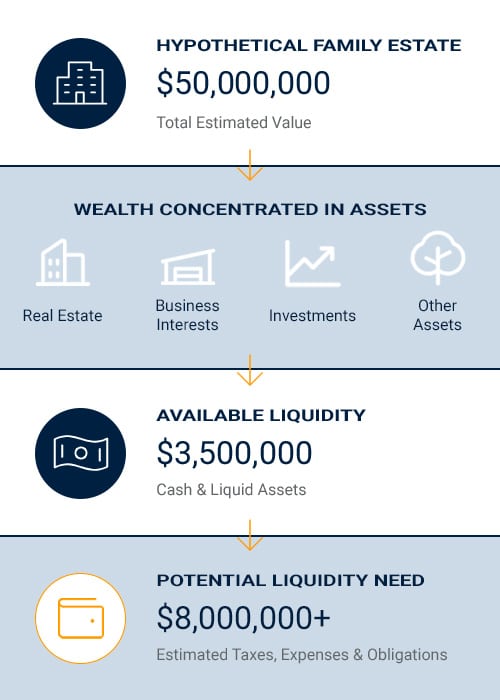
Significant Wealth Does Not Always Mean Immediate Liquidity
Many affluent families spend years building businesses, real estate portfolios, investment portfolios, and other valuable assets. Over time, their net worth may grow substantially, but much of that wealth often remains tied up in assets that cannot be easily converted to cash.
When an estate settles, however, taxes, expenses, and other financial obligations do not wait for favorable market conditions or a convenient sale.
The challenge is not necessarily a lack of wealth. The challenge is having sufficient liquidity available at the right time in the right place.
Estate liquidity planning helps families evaluate potential funding needs, identify liquidity gaps, and explore strategies that can provide financial flexibility while preserving the assets they have worked hard to build.
Wealth and Liquidity Are Not the Same Thing
Many families assume that a high net worth automatically translates into financial flexibility. In reality, a significant portion of wealth may be concentrated in assets that cannot be quickly sold without creating disruption, reduced value, or unintended consequences.
What Is
Estate Liquidity Planning?
Estate liquidity planning is the process of evaluating whether sufficient cash will be available to meet future obligations without forcing the sale of important assets.
For many affluent families, wealth is concentrated in real estate, privately held businesses, investment properties, or other illiquid assets. While these assets may contribute significantly to net worth, they may not provide immediate liquidity when it is needed most.
Many families ultimately choose to hold life insurance inside an Irrevocable Life Insurance Trust (ILIT) so the proceeds can provide liquidity while remaining outside the taxable estate.
Effective planning helps families identify potential funding needs, evaluate liquidity gaps, and implement strategies designed to preserve assets while creating financial flexibility.
Why Estate Liquidity Matters
Why Estate Liquidity Matters
A substantial gap between illiquid assets and immediate cash needs can create challenges for your family and legacy.
Without adequate liquidity, your estate may be forced to sell important assets, take on debt, or create unintended tax consequences.
Effective liquidity planning helps ensure your wishes are honored and your legacy is preserved for generations to come.
Estate
Taxes
Federal and state estate taxes can create a significant cash need, often due within months of death.
Wealth
Transfer Goals
Liquidity can help equalize inheritances and facilitate the transfer of wealth according to your wishes.
Settlement
Expenses
Legal fees, executor compensation, accounting, and other expenses add up quickly.
Business
Continuity
Access to cash can help preserve business operations and avoid forced sales during periods of transition.
Why Estate Liquidity Matters
Why Estate Liquidity Matters
A substantial gap between illiquid assets and immediate cash needs can create challenges for your family and legacy.
Without adequate liquidity, your estate may be forced to sell important assets, take on debt, or create unintended tax consequences.
Effective liquidity planning helps ensure your wishes are honored and your legacy is preserved for generations to come.
Estate
Taxes
Federal and state estate taxes can create a significant cash need, often due within months of death.
Settlement
Expenses
Legal fees, executor compensation, accounting, and other expenses add up quickly.
Wealth
Transfer Goals
Liquidity can help equalize inheritances and facilitate the transfer of wealth according to your wishes.
Business
Continuity
Access to cash can help preserve business operations and avoid forced sales during periods of transition.
Who May Benefit
Who May Benefit From Estate Liquidity Planning?
Estate liquidity planning isn't just for the ultra-wealthy. It can be valuable for anyone with significant assets, complex holdings, or a legacy they want to protect.
Estate liquidity planning is relevant when a significant portion of a family's net worth is concentrated in assets that may not provide immediate access to cash. Planning in advance can help provide flexibility and reduce the likelihood of difficult decisions during times of transition.
You may benefit if any of the following describes you and your family.
Business Owners
Liquidity may help fund succession, buy-sell obligations, and estate taxes without forcing a sale of the business.
Real Estate Investors
Significant wealth may be tied up in properties that cannot be sold quickly or without disruption.
Concentrated Asset Holders
Large positions in equities, private investments, or other non-cash assets may create a future liquidity gap.
Families Seeking Legacy Planning
Liquidity can help preserve important assets and support a smoother transfer of wealth to future generations.
How Estate Liquidity Can Be Created
Common Estate Liquidity Strategies
There are several ways to create liquidity for your estate. Each approach has advantages and considerations that may be more or less appropriate depending on your unique situation, goals, and timeline.
A thoughtful plan often combines strategies to help ensure liquidity is available when and where it is needed most.
Cash Reserves
Using cash savings or short-term investments to meet liquidity needs. This approach is simple but may reduce investment growth potential.
Credit Facilities
Lines of credit or loans secured by assets can provide flexible access to funds, but availability and terms may depend on market conditions.
Asset Sales
Selling investments, real estate, or business interests can generate liquidity, but may be challenging during periods of transition.
Life Insurance
Life insurance can provide immediate, income tax-free liquidity to help meet estate obligations while preserving important assets.
Why Life Insurance Is Often Used
Creating Liquidity Without Selling Important Assets
Life insurance is often used in estate liquidity planning because it can provide cash precisely when it is needed - without requiring the sale of real estate, business, or investment assets.
For families whose wealth is concentrated in illiquid assets, life insurance in an irrevocable life insurance trust can create financial flexibility while helping preserve the assets they have worked hard to build.
Liquidity When It Is Needed Most
Life insurance proceeds are generally available shortly after death, providing cash when obligations arise.
Income-Tax Free Death Benefit
Life insurance death benefits are generally received income tax-free by beneficiaries.
Preserve Important Assets
Liquidity may help reduce the need to sell real estate, businesses, or investments.
Estate Planning Flexibility
When properly structured, life insurance can be integrated into broader estate planning strategies.
FAQ
Frequently Asked Questions
What is estate liquidity?
Estate liquidity refers to the cash and readily available assets that can be used to cover taxes, expenses, debts, and other obligations after death.
How do I know if my estate has a liquidity gap?
A liquidity gap may exist when projected taxes and expenses exceed the cash and liquid assets available to the estate.
What assets are most likely to create a liquidity challenge?
Privately held businesses, real estate, investment properties, concentrated stock positions, and other illiquid assets often cretae liquidity concerns.
Can life insurance help create estate liquidity?
Life insurance is commonly used because it can provide immediate cash without requiring the sale of important assets.
Should life insurance be owned by a trust?
In some situations, an Irrevocable Life Insurance Trust (ILIT) may help keep life insurance proceeds outside of the taxable estate.
Will beneficiaries pay income tax on life insurance proceeds?
In most cases, life insurance death benefits are received income tax-free by beneficiaries.
When should estate liquidity planning begin?
Planning is often most effective before a liquidity need exists, allowing families to evaluate options and implement strategies proactively.
Understand Your Estate's Liquidity Position Before It Becomes a Problem
Evaluate potential funding needs, identify liquidity gaps, and explore strategies designed to preserve the assets you've worked hard to build.
RELATED INSIGHTS
Additional Planning Insights & Resources
Explore additional case studies, planning insights, and educational resources related to estate liquidity, premium financing, and advanced life insurance planning.

ILIT Planning
What Is An Irrevocable Life Insurance Trust (ILIT)?
Understand how irrevocable life insurance trusts are commonly structured and how they may support estate liquidity, gifting, and multi-generational planning goals.
View ILIT Planning →

Policy Review
Does Your Existing Coverage Still Support Your Goals?
As your wealth, family, and goals evolve, your life insurance strategy should evolve with them. A review can help confirm your coverage still supports your objectives.
Explore Policy Reviews →

Premium Financing
Premium Financing Life Insurance: How It Works
Learn how premium financing may help certain families create estate liquidity while preserving investment flexibility and minimizing large out-of-pocket premiums.
Learn About Premium Financing →